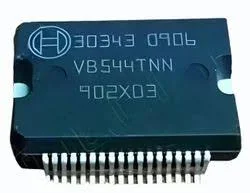
One widely listed version of 30343 is a Dual-Channel CAN (Controller Area Network) transceiver manufactured by Bosch in a 36-pin SOP package. CAN transceivers are used for high-speed serial communications between microcontrollers and modules in vehicles, especially in engine control and vehicle network systems. It supports fast data rates (e.g., up to ~500 kbps) and features low standby current and quick wake-up from sleep modes.
Function: CAN bus transceiver (interface between microcontroller and vehicle network)
Package: SOP-36 surface-mount
Typical context: Automotive electronics (ECU communications, body control modules).
🔹 2. ECU Driver / Power Drive IC (Aftermarket Listings)
In automotive repair/parts marketplaces, 30343 is also sold as a “power driver” IC used on engine control unit (ECU) circuit boards — especially as a common failure point and replacement part during board repair. These listings treat it as an automotive drive or power interface component.
🔹 3. Other Non-Standard Uses or Markings
Some listings and part search engines show “30343” associated with other unrelated parts (like ZL30343 by Microchip — a completely different network synchronization IC used in telecom systems) or non-electronic part numbers that happen to include the string “30343.” These aren’t the same as the automotive IC and are typically different products altogether.
📌 Summary
Primary known IC: Automotive Dual-Channel CAN transceiver from Bosch in an SOP-36 package.
Typical use: Vehicle network communication and ECU electronics.
Note: There is no widely published mainstream datasheet for 30343 outside specialized automotive/manufacturer documentation, so full specifications may not be easy to find publicly.
If you have a photo of the chip marking or the circuit board it came from, I can help confirm which version of 30343 it is and how it’s used in that circui